The World through Tippe's Eyes

Be always at war with your vices, at peace with your neighbors, and let each new year find you a better man.
~Benjamin Franklin

Wednesday, November 6, 2013

Twenty-Three

What is age but a number? Especially when you’re like me and everyone seems to think you’re 6-8 years younger than you are (trust me – it’s not much of a compliment when people don’t treat you like an adult at my age). But there is something so special about the passage of another year in life that people go out of their way to wish each other a happy birthday. On the surface, it seems rather superficial. It’s a reason to have a party, to buy into consumerism and individualism, to celebrate ourselves. Yet there is something to be said for the opportunity birthdays give us to reflect on what we have accomplished over the past year. For me, 23 was a year for remembering who I am, and I hope that 24 will be a year for becoming who I want to be.

Finally getting our master's degrees!
23 was a very challenging but rewarding year in my life. I have accomplished many significant goals in my life in the past year – things I never in my wildest dreams thought I could achieve. At the beginning of 23, I successfully defended and submitted my thesis as the final requirement for my master’s degree (a semester and a half late) after much struggle and hard work. But right after my defense, I got to see The Killers in concert – a band I have been waiting what seems like my whole life to see. Thus, my year started off both difficult and exciting. In the winter, I was looking for a real job, but for the first time in my life I had the time to travel. It was really difficult for me to ignore the call of the world! Especially when I was finding dirt cheap airfare like $149 roundtrip tickets to visit Alicia in the Virgin Islands and $500 tickets to visit Peru with my amazing roommate, Katrina. I finally got to live the life I have always wanted to live this year. I have been so blessed with the opportunity to have so many friends all over the world which has allowed me to travel, and not just as a tourist.
 
I think my biggest accomplishment at 23 may have been completing the Disney World Marathon this past January. While I may not have finished with the best time, running a marathon is not something I never in my wildest dreams ever thought I could accomplish. It was one of the hardest things I have ever done, right up there with finishing a Master’s Thesis, but I’m glad I did it. Life was by no means easy for me this year, but after all I pushed myself through this year, I know I can do hard things. And that knowledge, that belief is valuable.

The Baths at Virgin Gorda, B.V.I.
I am so glad I had the chance to try new things this year, like having Cuy (guinea pig) for dinner at a Cuscanian family’s home and bouldering (sort of) in the Caribbean. Even dipping my toes into academia with my Sociology degree was insightful. This past year has taken me to places I could ever only dream of in the past, and now that I have had so many amazing life experiences, I have come full circle to start my career in urban planning. It’s crazy how it all worked out, getting the job at Eagle Mountain through a phone interview I did while sitting in Charlotte Amalie with Mary near the beach, starting the job the day I got back from visiting Peru and then North Carolina for Trish’s wedding, then getting the career at Lehi, a city which Frank Gehry had once designed a building for! Cities are in my blood! It’s what drives my passion for both travel and planning, and my desire to both experience and change the world somehow. And this year, being 24, I get to start doing just that. I have an amazing career opportunity ahead of me in addition to several major (and cheap) trips planned which will allow me to see more of the world and get in touch with my mom’s side of the family in Thailand. 24 looks very promising so far and I cannot wait to see what this year has in store for me.

I spent the last moments of my year as a 23-year-old doing something I haven’t done in months: running. I don’t often feel like running, but tonight I did. I felt so alive in the brisk autumn night. As my iPod sang to me this evening:

Blackbird singing in the dead of night, take these broke wings and learn to fly. All your life, you were only waiting for this moment to arise.

Life will always bring heartache and disappointments but once you can learn to pick yourself up and make something of what you've got, life truly becomes beautiful.

Monday, December 3, 2012

That's My New Philosophy

Life has really been super crazy hard, yet awesome this year. I haven't had too much time to think much about anything besides two things: My master's thesis and traveling. Aside from the stress of changing my thesis a second time this summer and trying to meet the deadlines for a December graduation since then, I haven't given myself much time to do anything except visit the people and places I love. And I'm okay with that. In fact, I think I may have my priorities all mixed up. For some reason, school has never come first in my life. And right now, I care more about figuring out how I can visit friends and family and see more of the world at the same time.

This year I have traveled more than I ever have before. I have been to twenty something states (if you count driving through a few) and three new countries. And next year, I hope I can travel even more. I feel like I didn't truly get to enjoy my travel experiences with this thesis hanging over my head, but next year I'll be free to fully experience wherever I may go. Hopefully I can even get a job in the travel industry so I can continue being involved with travel for my work as well.

It is so important to me to experience life. I want to see for myself what the world has to offer instead of read it in books or analyze it on a computer in SPSS. And it's such a sad prospect to think of experiencing life alone. Thus, I use the excuse of visiting friends and family to travel. I thoroughly enjoy getting together with people who have been a part of my life at one time or another. I am a sentimental person (hey, I'm a girl after all!), and it's so refreshing to remember the people and places that led me to where I am now. With all the people I've known and places I've been, the opportunities for travel are endless with this rationale.

In short, my goal in life right now as I am graduating and have not yet found a career is to enjoy and experience life to the fullest. I want to do everything I can to maintain my friendships all across the world while making new ones all the same. And once I finish this blasted thesis project soon, I hope to start a travel blog full of my experiences and any tips I've learned along the way. This will be my way of sharing my travels with even more of my friends who aren't able to come with me.

Traveling is my passion. It involves cities, history, geography (and even a little sociology). It is the essence of both people and place coming together. I really hope I have the opportunity to travel throughout my life, but for now, I'll do as much as I can while I have the time and (some of the) means to do so.

Tuesday, February 7, 2012

About Me

I don't really have time to sit down and write a well thought out post these days, so I guess a short one will have to do. I apologize that this is also a departure from the more academic theme I've tried to make, but hopefully this may help others better understand me when I do make my more academic arguments. Here's a list of things I have learned about myself so far in 2012:

1. Through taking a picture of something I've experienced each day this year, I have learned that it is much easier to document and remember what happens in my life through one or two short sentences each day (which are the captions for my photos) rather than the detailed journal entries I love to write but never have time for. It's also better than the short lists of random words I use to define my day which I write on sticky notes hoping they will jog my memory when I finally have time to write.

2. By taking pictures everyday, I have also realized that the highlight of my life these days really consists of food (seriously, almost half of my pictures are of things I've eaten or places I've eaten at!), school work, hanging out with Nate, and admiring the scenery. I never knew food was such a big part of my life before!

3. I always knew I get anxious when I have to call somebody on the phone, but I really don't like sending out emails either! Especially because I've always had bad luck with technology.

4. I came to the sad realization that the older I get, the more I realize that I don't like everyone I meet.

5. I have a very unique life background based on a very unlikely combination of my race and ethnicity, my religion,  my experiences growing up in Hawaii, my experiences traveling the United States and parts of the world, the random jobs I've had in dozens of different industries, the eclectic mix of friends, acquaintances and colleagues I have, and I could go on and on. I think a lot of people don't understand me because of it, but I like to think it helps me relate to others better as well.

6. I also realized that I love to exchange stories about life perhaps a little more than most people would be comfortable with. In short: I talk too much :P

7. I do enjoy a good TV show, but no matter how many shows and movies I have on my list of things to watch, I really do think it's the biggest waste of time.

8. I feel guilty for having so many Facebook friends, but I really do love them all! I'm not just a "friend collector" but I am genuinely interested in their lives. And I do go through delete people I don't feel like I would ever talk to again and stuff like that, but I still have so many people I care about that I want to keep in touch with. Because I have lived, worked, and traveled around in so many places I do know a lot of people. I love being able to see where people are at and meet up with them whenever I travel. That's been the most valuable thing about Facebook for me. And after all, it's supposed to be a social network.

9. I am starting to realize that I am a gift giver. That's one of the things that brings me so much joy in my life.  I am pretty good at saving my money, but when it comes to Christmas and other celebrations, I love having an excuse to spend money on the people I care about. If I see something that reminds me of a close friend or family member, it takes a lot for me to not make that purchase.

10. My ideal career choice would be something in the travel and tourism industry. I have always had a plan for what education or job I wanted to get somewhere in life, but I never felt very strongly about any particular career path in the past; I would be happy with whatever job I ended up with and I would be able to learn to do my job the best I could. My past career goals were always to achieve more broad, general end. I wanted to be a diplomat to influence education policy somehow. I wanted to work for UNESCO to  work with historical places somewhere. I wanted to work for an NGO to help people in need across the world. I could never think of any one particular job that would make me happy in the past. These jobs were all a means to an end. I wanted to be a positive influence in the world and I needed to have a career path, but I didn't think any of these would be so much fun or make me particularly happy in my personal life or anything. I mean, a job is a job. However, the more I study tourism in sociology and the more I want to travel and see the world, the more I am beginning to realize that I would have so much fun with a job that allowed me to do research relating to maps and travel schedules and cultural reports, not to mention the most amazing benefits that come with it all. If I can find a way to fit urban planning and sociology into such a career, that would probably be my dream job.

Monday, January 9, 2012

The Year of the Dragon

2012 is off to a great start. This year will be the year to make things happen. This year will be the year that dreams will come true. I don't know what it is about the new year, but something is definitely in the air, and it seems that I'm not the only one who feels it.

While 2011 was a very productive year for me, I'm not sure that it was the best it could have been. The last 4 or 5 months of the year passed so quickly - moreso than I've ever felt time fly before. It was as if the minutes, hours, days, and weeks slipped by unnoticed until they were absolutely gone. However, at the same time I simply couldn't wait for 2011 to be over and done with. I had many wonderful opportunities and met many amazing new people, but something just seemed to be lacking in the quality of time I was using. Yes, it was exciting for me to publish a book in March and to successfully present my research at several wonderful conferences in amazing cities. I started running which is a miracle since I never ever thought I would ever become a runner in my entire life. I can't believe I ran four half marathons, including one at Disney World in Florida! And that gave me the opportunity to visit the Harry Potter theme park in Universal Studios. What a dream! And I was able to visit more than 4 new cities, which was my goal for 2011. I went to Seattle, Portland, Boise, Calgary, Edmonton, and Orlando, and I'm so glad I finally had the chance to use my new passport I've had for a while.

On another note, I was not able to keep up this blog as regularly as I had hoped to. I do actually have dozens upon dozens of half written blog entries, but in the last part of the year, I found it difficult to finish them thoroughly. If I hope to continue this blog as an effort to keep up my writing skills, I think I need to start writing shorter posts.

After reviewing my resolutions for 2011, I have several things I hope to accomplish in 2012. As a continuation from last year, I do hope to stay more active. I want to continue running as much as I can, and I want to travel to at least 4 new cities, which definitely includes Chicago (where the 2012 Rural Sociological Society conference will be held in July), as well as 1 or more new countries. I really need to get out and see the world, especially Europe, like I always dreamed I would. In the past, every time I planned a trip my travel buddy would bail on me. This time I am determined to get there no matter what. Airline fees are only going to rise in the future, and I have enough friends in different places that I should be able to get around even if it's by myself. I am utterly determined to get to Europe! I have also already purchased a handful of tickets to attend several events at the summer Olympics in London this year, so wish me luck in finding a way there!

The most important thing I must accomplish in 2012 is to graduate from BYU with my MS degree in Sociology. I need to focus my writing efforts on my thesis project daily (rather than on a blog haha) and hone my statistics skills in order to finish. This will be the greatest challenge of the year.

With the exciting nature of events to come this year, especially regarding my travel plans for the year, I hope to have many new adventures as well. This is my last year living in Utah as far as I'm concerned, and I really want to take advantage of all the magnificent things I can do here. So my ultimate goal is to try 10 new, fun things here in the West/Rockies. I hope these things will include learning to ski, white water rafting, hiking the Grand Canyon, and attending at least one showing at the Sundance Film Festival.

I realize that accomplishing all these things will probably take both a lot of time and money, so this year I'll have to work harder than ever and take more risks in my life. And I'm willing and ready to do that. I have a certain clarity this year about what I want, and I'll do whatever I need to do reach  my goals. This year I am decisive (for once)! I'm so excited to see where this year will take me. Hello, 2012!

Saturday, July 30, 2011

Building Strong Communities on Cultural Foundations

TO:  Kathy Kolnick, Professor
FROM: Beatrice “Tippe” Morlan, PPD 417 Student
DATE: February 23, 2010
SUBJECT: Building Strong Communities on Cultural Foundations

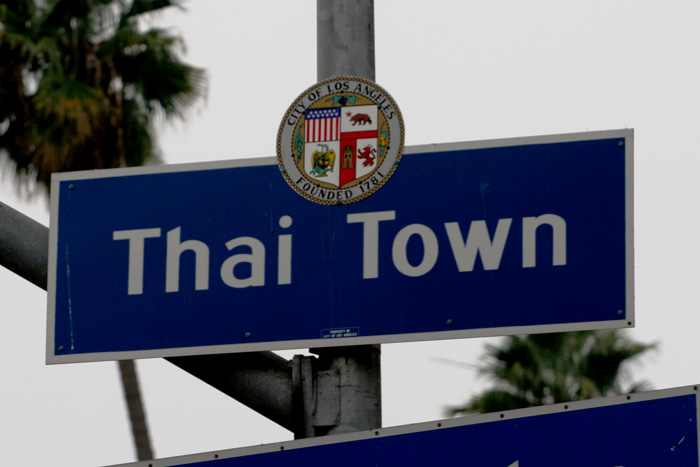
Thais are a historically marginalized ethnic group here in America. One could call them a “minor” minority whose members do not conform to the typical Asian American stereotype.  They are the most heavily trafficked ethnic group within the United States according to the Department of State’s Trafficking in Persons Report, and Thais do not have enough political clout to raise very much awareness of these and other struggles they face. The United Way estimates that 50,000 or more Thais living on the West Coast are undocumented, and this has fostered a sense of transiency and lack of community among most of them living in America.

Institution building through understanding the history of Thai Americans is greatly helping the community to build a stronger sense of solidarity and pride (Abbott and Adler 1989), something that has been needed for a long time. Ever since the official designation of Thai Town in 1998 by the Los Angeles City Council, community members have had a concrete place to call their own, a place to rally around in Los Angeles and a place to teach and learn about the history of their community. The Thai American “group identity” grows stronger each day with increasing education and awareness being exchanged between the Thai and American cultures (Abbott and Adler 1989). The historical analysis of 
Thai Town improves understanding of the transnational Thai American culture allowing community members, politicians, and many others to more easily recognize and respond to their needs.


The federal designation of Thai Town as a cultural tourist attraction in 2008 through the Preserve America white house initiative was a “critical decision moment” for Thais as it enabled the community to better serve its members through increased funding and services. This project is paving the way for future policy options through increased awareness on a national scale and access to funds to support community-based initiatives (Johnson and Schaffer 1985). It is so essential for ethnic groups to learn of and identify with their history, especially within the context of the places they reside. This allows them to function more successfully as a part of a larger community. Without such awareness, it can be difficult for others to understand the role such ethnic groups have in society as well. This is why cultural tourism within our own country is a critical tool for using history to expand people’s knowledge of and interactions with one another.

As a Thai American, I am grateful to be so involved in my culture now that I have found my place in Thai Town, Los Angeles amongst others like myself. I have been fortunate to have a role in Thai American history through my involvement with the Thai Community Development Center working on many of these initiatives. My understanding of my own culture and its place in the context of American cities is just beginning to grow as I work to improve the conditions of the Thai American community in any way I can.


Sunday, June 26, 2011

Look what I found

I was going through several of my old journals today, just the ones from the past few years, reflecting on how I've grown and who I've become since starting college and my adult life. And after finding this poem I wrote while bored at work one day, I realize that I need to brush up on my vocabulary! (Although I think I was studying for the GRE at this time, to be fair). And really, I need more art, adventure, and creativity in my life. I mean, after all who doesn't!

Friday, June 12, 2009
The city stands a mile high above
and Man has made his Babylon today.
To reach the heav'ns, to prove perfection's lie
- an ephemeral state of seeking out
the higher faster stronger ways for all.
Pedantic airs, occluding love and worse:
ignoring nature's diatribe to Us,
the World - Our human taciturnity,
a non-response to the dear mother earth.
Oh, fate and destiny will have revenge.
Man lives, a microcosm of all life.
Eternity all emotion consumes.
To love with no reciprocating force,
One man stands high above adversity.
What pain, what anguish shows us now, the Way.
But one Man makes all hearts to suffer more,
that one Man, he can't Love to save a life.
How One man loves, one Man cannot, He loves,
but not one Girl. Attenuated here
she falls away, for ignorance is bliss.
one Girl stands high above the city miles
and miles into the sky. She now looks down
to see one Man, but Oh, she sees the World.
Come down to meet One man who teaches Love.
one Man and Babylon have been destroyed.

Tuesday, June 7, 2011

Personal Space


Okay, one of my favorite professors posted this Freakonomics article on facebook, and I could not resist the urge to comment on it. A good portion of the American population has at one time or another flown in an airplane. And as times have gotten rough for the major airline corporations in recent years, it seems that someone brilliantly thought that decreasing the space between rows in order to add a few extra seats to sell for revenue was a great idea. I have flown a fair amount in my lifetime thanks to the fact that I grew up on an island smack dab in the middle of the largest body of water in the world with all my relatives residing tens of thousands of miles away, and I like to think that I know a thing or two about how airplanes have changed over the last twenty one years. And one of the biggest changes I have noticed is in the decreased amount of personal space alloted to each customer that rides an airplane (outside of first class, of course). I used to be able to comfortably rest my arms on my tray table and lay my head on them to nap on longer flights. But in the past several years I have not been able to do this (nor have I grown). And as this personal space has gradually been taken away from me and from any other normal patron of the airline industry, I have increasingly noticed and been offended by other patrons, particularly those sitting in front of me, who decide to recline their chairs, taking away even more of my personal space on those flights. And as luck would have it, it seems like the only person who decides to recline their chair in the area I choose to sit always happens to be in front of me.

Personal bubbles are real, people! And when you invade someone else's bubble on an airplane by reclining your chair, in order to retain a comfortable sense of personal space, that person then has to recline their chair, starting a chain reaction. This is where the Freakonomics article brought in the question of altruism.
think the choice to recline one’s airplane seat is a great example of natural altruistic tendencies. Reclining one’s own seat increases his comfort, but only at the expense of the person directly behind him. Then, in order for that person behind to increase his own comfort level back to what it was before the person in front reclined back into his space, he must now recline back into the space of the person behind him at the expense of that person’s comfort, and so on. An experiment observing this behavior may be a better measuring stick of natural human altruism tendencies than the Dictator game or similar games since the behavior could be observed in real time and without the behaviors associated with knowing one is being observed in a laboratory.
Altruism is a natural human tendency. But selfishness is as well (i.e. survival of the fittest). And when individual capital is at stake, when a person has paid for their seat on a plane, does that make them feel entitled to that certain amount of personal space so as to get mad or irritated when someone tries to take it away from them? Is altruism sometimes lost in instances like this because we are fighting for something we paid for, a specific product we expected to receive? I think this definitely has a lot to do with it. Although sometimes seat recliners are just irritating on the basis of decreased personal space alone.


So then why is it that people are so particular about the atmosphere that they travel in? Sure, some plane rides are longer than others and it is definitely nice to be able to retain a comfortable amount of personal space when you have to sit in the same spot for 9 or 10 hours. However, I have seen these same selfish instincts kick in on all sorts of public transit having been a regular patron of the Honolulu and the Los Angeles Metro transportation systems for years and years and years. On the bus, people want to keep to themselves. Of course, if you strike up conversation people are more than willing to share a conversation or two with you in general; I learned this from an interactive transportation planning homework assignment I had to do for Mike Woo's class (former City Councilman in LA). But for the most part, people are happy to be left alone when they are in transit. They choose the seat or the spot that they view to be the best that they can get at the time they board the vehicle, and they plug in their headphones, read their books and magazines, or nod off in their own little worlds not expecting to be bothered by anyone else. And when they are bothered beyond the occasional casual conversation, it is irritation. Almost a violation of a social norm. But on buses, you can't recline your seats and invade someone else's space in that sense. It really takes a crazy person talking to an imaginary being (which has happened several times in my personal experience) to cause the kind of discomfort that the reclining of a seat causes on a plane. 


But knowing this, am I (or even are you) going to stop reclining your seat when the person in front of you pushes their seat down into your lap? Alas, I don't think I will. I won't be the first to do it, but because I was raised in this fine country full of individual rights and personal property, that tiny bit of space is mine by right when I purchased the plane ticket, so I think I will continue to reclaim my space by reclining also when (not if, but surely when) this happens to me again. I feel guilty, but what can you do? Where does the cycle stop? In such an individualistic nation, we are accustomed to having a certain amount of personal space, and without it life is uncomfortable. And boy does comfort mean a lot to us all.

Thursday, June 2, 2011

I Love Maps!

I've been spending a lot of time this week cleaning my room and putting up posters and pictures I've been meaning to decorate with all year. And it's almost crazy how half the things in my apartment have to do with maps and travel! I have recently come to the realization that I am obsessed with seeing the world. Geography is my one true, undying love. Travel is my passion. There is nothing that would make me happier to see these places for myself and to imagine the history that has taken place there. Travel combines four of my absolute favorite things: geography, history, cities, and adventure.

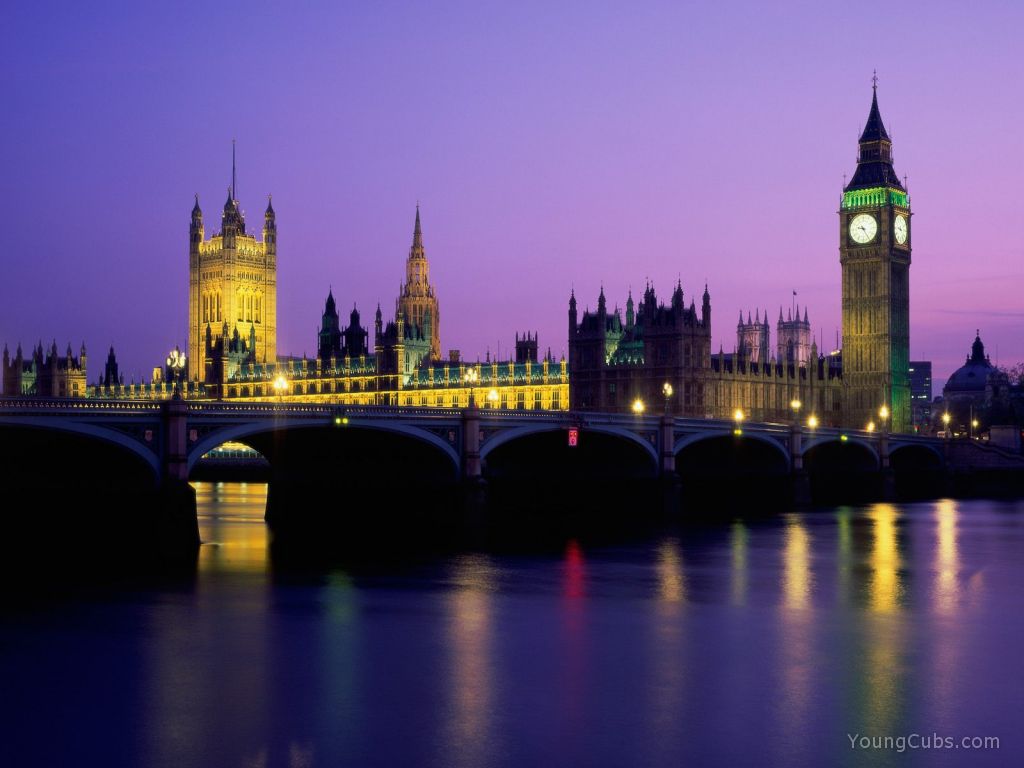
To give you a sense of exactly how obsessed I am, here's a brief overview of some of the things I have in my room as proof.  I have a huge national geographic map I've had for a long time which shows where I've been throughout the world. There's a couple hand drawn maps of the human features of the Greater Los Angeles Area (which even shows the LA Temple! - see image to the right) and of the World. There's a framed copy of a historical map of Oahu painted in watercolor just above those next to my bookshelf, and there's a wall sticker of the London skyline spanning the entire wall above that. I have little trinkets from trips I have taken on my bookshelf including a Mardi Gras mask from NOLA, a small statue of liberty toy from NYC, an Aztec wall hanging from Mexico, and a mini hand painted fan from Chiang Mai, Thailand. There is a wall sticker of the Golden Gate Bridge on the other side of the room along with my collection of smashed pennies from places I've been on a small wall shelf near my small, wooden poster of the Eiffel Tower. I just put up a beautiful copy of this historic map of important places in Paris (see below), and each year I buy a travel themed calendar of a place I have been longing to go. This year, it's "1000 Places to See Before You Die." I won't spend any more time boring you with more details of what I have up right now, but you get the picture, right?


I never realized how passionate I was about these things until I was dying because I might have to reschedule my first ever trip to Europe - again! Both because of high airfares and a lack of travel buddies. It seems like such a silly thing to be upset over, but seriously my entire life has led up to this obsession. My family has never been wealthy enough to truly take a vacation so all my life I have fantasized about what it would be like to visit the canals of Venice or to walk the original square mile of the city of London. As a kid I loved reading random articles in the Encyclopedia and I always stopped to read about different countries and the people who made them famous. Czechoslovakia is one of the most memorable articles I have ever read. I was very young, but it was cool to recognize how the world is constantly changing around me at that age as I knew the country had split in two since that Encyclopedia was published thanks to my first snazzy map of the world given to me for being a member of National Geographic Kids' young explorer team (I was chosen to do cool activities they sent me each month, probably for research and advertising purposes). Geography and history came alive to me through imagining what it would be like to travel to those places and to relive those times.

Visiting Jackson Square in NOLA
I suppose it also did not help that my dad works at the airport and used to bring home tourist magazines for us kids to play with all the time. I loved looking at the pictures of hotels imagining what it would be like to stay there and do all the things tourists did in Hawaii. I never knew what it was like to be a tourist at home for a long, long time (mostly because it's expensive!). Even though I have been to Thailand and Ohio several times growing up, we never really stayed in hotels or acted as tourists ever. So I kept dreaming of places like New York City, London, and Versailles. And the more I could not travel, the more I wanted it and the bigger my dreams became. In the tenth grade, I even joined a state student government program called the Secondary Student Conference because I wanted to stay in a hotel for three days in Honolulu during the event. Sure, I loved the work I did in student council. It paved the way for new (but smaller) passions and causes in my life such as education policy and urban planning. But what I loved the most about my new "passions" was that I kept finding ways to travel for free to new and exciting places. I fundraised most of the money for an alternative spring break trip to Mexico. I received academic funding from USC to attend a planning conference in New Orleans. BYU recently paid my way to Seattle for a sociology conference. And in high school, the state paid for me to go to Philadelphia for a national student council conference. I am proud at how savvy I have been at finding ways to see new places and experience new cultures. But I still can't wait for the day that I can experience leisure travel. Hopefully that day will come soon.

I have only recently come to realize this obsession that I have had for most of my life, and it really makes me wonder how it is that people develop passions for things like travel or animals or art or anything at all? Isn't it such an odd thing, contingent on life experiences and the circumstances we are born into? But most people do have something that they are passionate about. Is it something we need in order to make life meaningful as humans? Are these passions modern society's way of replacing the fanatic, obsessive sense of religion people once had until a few hundred years ago? Durkheim might have something fascinating to say on the subject of such passions replacing the old kind of religiosity that was central to life in the past. Sure, people can be and are religious these days. But really I think he was talking about the presence of something big that governs one's life. For instance, someone whose passion is dancing might have a life that revolves around their rehearsal schedules and competitions. It almost dictates their life schedule, and they need it to be happy. For me, I am constantly planning a new trip, whether or not it is realistic, trying to see if I can make Europe or any other sort of travel happen. And now that I live in the mainland, it has been awesome to take road trips! Eisenhower's highway system has given us so much power to travel and access to the rest of the 48 states. The biggest issue with travel, however, is that I don't like to travel alone. What's the good of travel if you don't have someone to share those unique experiences with? In the end, we are all social beings after all, and our passions have to play into that.

Tuesday, May 24, 2011

Inspiration

Humans have the ability to accomplish such amazing things. It never ceases to amaze me to see or hear of someone accomplish an astounding feat. For example, Alex Honnold, a twenty-something year old kid from Sacramento, is pretty much the world's best free solo rock climber. At 23, he was the first person to ever free solo climb the North face of Half Dome in Yosemite - and he did it in the time it took me to run a half marathon (2 hours and 50 minutes). I'm in an awesome rock climbing class this semester and we had to watch a video of Alex's adventure on the first day of class. Below is a short clip from the video (the whole thing can be seen here, if you are willing to ignore the Chinese advertisements).


Watching him climb gives me butterflies just thinking about what it takes to do what he does. While I could never hope to solo climb any sort of rock, it is so inspiring to know that someone out there is doing this. Something that no one ever thought could be done before. As time progresses, more and more people accomplish new things and set new records. For one thing, we have newer technologies which allow people to learn and to dream of doing novel things. For another, being exposed to so much more of the world through technologies such as the internet and social networking, people are more inclined to take risks in all aspects of life. I'm sure there was someone who might have had the ability and stamina to do what Alex does, but no one dared to try in the past. It wasn't quite socially acceptable to climb a wall without safety precautions in the past, but in this day and age, anyone can generally do what they want no matter how stupid it may seem. After all, climbing a 2000+ foot rock face without any safety gear does seem like a pretty dumb idea. But our society rewards boldness when it is met with opportunity and success. And Alex was lucky enough to successfully show the world his talents in his own bold endeavors.

People will always find new ways to go and do whatever they want in this world. It's admirable. It's impressive. As long as the world loves to hear stories about people who can create and accomplish astounding feats, there will always be people to do them.

Friday, April 29, 2011

American Royalty

I just do not understand all this hullabaloo about the Royal English Wedding that happened today. It's not even our country, and yet it's the only thing on the news. It's been all over every single aspect of the media since last week, if not before then. Sure, it's cool to learn about the details of one of the most expensive weddings in history costing tens of millions of dollars, but it is not so fascinating that I would actually watch the event or that the news should only cover this story.

I do love her dress. I have always loved lace sleeves on
wedding dresses. Even though I don't get the excitement over
the wedding, Kate truly is an elegant, classy gal.

But I guess what matters to people is that it sells. This kind of event appeals to the masses. After all, a supposed 2 billion people tuned in to watch William and Kate tie the knot. Daniel Radcliffe (who played Harry Potter in all the movies) said that the American media is making it a bigger deal than it is even in England. I suppose it might have to do with the fact that America has no royalty. We treat our Presidential families like celebrities, but our president changes every 4 to 8 years. Although former presidents are still important, they aren't always in the limelight past those 4 or 8 years. I mean how often have you heard anything about George W. Bush since Obama took office? In England, there is only one royal family, and it's been that way for hundreds of years, if not thousands. So when the firstborn son who is pretty much going to be king one day gets married, it's a big deal. Perhaps we Americans turn to them to fulfill any romanticized fantasy of how it would feel to be royalty or to have a monarchy. It's interesting how many people I know who watched the wedding, or were mad because they fell asleep during the wedding, or were critiquing the fashion and elegance of it all. I personally don't know how anyone could get so sucked into all that, especially when we are so far removed from that actual event. But I can see how the idea of a normal girl becoming a royal princess and an international political figure is appealing, especially in England where the royal family seems to be loved by all.

Perhaps it is America's fascination with weddings in general that brings this huge media coverage. Weddings are all about showcasing superficial material goods representing two people. Sure, symbolism and love is a precious and sacred thing in weddings. But really, beyond the actual wedding ceremony, the reception and everything else seem to be fancies and frills. Weddings have really become a lavish thing the more mass consumer culture has become a part of modern life. Of course not all weddings are so expensive and fancy, but planning a wedding has come to entail so much more than simply becoming united with your spouse. So much time, energy, and money seems to go into planning a wedding these days. I have seen many of my friends get married in the past few years, and the wedding planning and engagement stage seems to be such a stressful time in their lives! Getting married and having a wedding has come to be much more than simply uniting two people in love forever.

America's mass consumerism seems to have shifted our entire culture and traditions regarding marriage to include wedding receptions and gifts and other material things which may not have been a traditional part of weddings in the past. As so many people focus on the material things in life (i.e. what dress Michelle Obama wore to some party or how much Kate's wedding cake had cost), it makes sense that people would want to hear about all the material aspects of this royal wedding. America did it for Chelsea Clinton's wedding, and now America has done it for William and Kate's wedding (but on a grander scale). These high profile celebrity politicians seem to set the stage for the rest of the world determining the new trends and fashions in wedding cakes, dresses, designs, and so on. I don't know if we can ever stop watching people like them. The media plays a powerful role in determining what society knows and thinks about the world. And as long as the media keeps tabs on these kinds of celebrities, the world will be there to watch.

Thursday, April 28, 2011

Random Thoughts on Hard Things

You know what's a good way to open up great opportunities in life? Take something that is hard for you. Something you are not good at. And learn it. Master it as well as you can. And you will be a better person for it. Condelezza Rice spoke at BYU in January and she talked about how that's the way to improve ourselves as individuals. And I believe it's true! In America no one likes to do hard things anymore! We are so specialized that we don't really have to. I know it's true for me. My whole life I have only done things I am good at. Perhaps this is why people think I excel in school and all, but it's just that I know my strengths and I play off of them. I don't do math or science because I haven't kept those skills up. It was too much work. I don't have the time, focus, or patience to learn math stuff for now, so I decided to tackle my hatred of running this year in order to tackle that fear and road block in my life and become a "better" person. So I signed up for 3 half marathon this year! My first one is in two weeks. How crazy is that?

Wednesday, April 27, 2011

500 Days of Summer

Summer time. Isn't it such a grand time of year? Well, technically it is spring now that I'm in Utah. And it was snowing up a storm around here all day today. But still. The regular school year is out and now is the time for making floral arrangements, learning how to make maps, and hopefully lots of rock climbing! Because of my upbringing in the tropics, I have never quite known what it was like to truly have a summer. People seem to think to live in "paradise" is to live in a perpetual summer. Unfortunately, it is easy to forget the good weather and gorgeous landscape when you have year-round schooling and are always on the watch for bugs and other critters getting into your things.

Rock climbing in Rock Canyon, 2009
Don't get me wrong: I am grateful to have grown up in such an amazing place. But I was living in a bubble, and I never got to enjoy the wonders of the seasons until this year. Even living in Los Angeles didn't bring a tangible change in the weather throughout the year. When I was young, I remember some controversy over the standardized Stanford Achievement Tests used to measure our skills as elementary schoolers well before the No Child Left Behind policy was conceived. There were questions on the test which asked about "common knowledge" of the world in which we live. The thing is the subject of these questions was often the four seasons. There was no way for any of us students in Hawaii to know what snow looks or feels like or what time of year the leaves fall off trees. When I moved to the mainland for college, I was so utterly excited to see signs of seasons and changes in the world around me. I was so happy every time I saw a squirrel on campus at USC. I was ecstatic to see snow for the second time ever when Josh taught me to snowboard at Mountain High in Wrightwood, CA. I was amazed at all the colors of fall this past year in Provo. There's just something magical about these cycles the world flows in and out of so gracefully.

As I approach my very first full year of living in Utah, it is such a wonder to experience the change in all four seasons. Despite having allergies for the first time, it is so worth it to be able to see the leaves budding on trees and flowers blooming on empty branches which were just a week or two ago only the skeletons of trees. Now I understand a little more about what that SAT test was talking about in grade school. Now I can relate better to books and art, and I have such a better understanding of the world around me. How important it is to understand these things, especially as the world becomes increasingly globalized! I welcome spring and summer into my life the joy as I now know how wonderful it is to feel the warmth of the sun after a "bitter" winter.
We are enabled to apprehend at all what is sublime and noble only by the perpetual instilling and drenching of the reality that surrounds us. We can never have enough of nature. (Thoreau)

Friday, April 8, 2011

To Be

March was a busy month, and April promises to only be busier. It's so tempting to fall into the senioritis mindset because let's face it, whether or not you are a senior everyone feels "senioritis" at some point in each semester. It seems that it is much easier for this generation of students to get bored with the things we are studying. I am not sure how things used to be in terms of distractions and procrastinating graduate school work, but I feel like I'm a terrible graduate student! Always distracted by websites, text messages, and web surfing random ideas I have. For instance, on Wednesday I woke up at 8am to prepare soda cupcakes (yes, cupcakes made from the box with a can of soda!) with homemade frosting; I had so much fun baking when this is the week that I need to be studying and writing more than any other time in the semester! I have several interviews to transcribe, fieldnotes with memos to write out, and book reports to do. But it seems like everything in the world is trying to distract me from my actual work in this last week of class.

It's so tough to concentrate and focus at a time when life outside of school is getting so exciting. There are so many local concerts I want to attend. Friends want to hang out now more than ever. I have been traveling around lots lately and making time I don't have to see old friends. I was even tempted to fly to LA again this weekend for the USC Songfest (I'm so sad I'm missing Rooney and Augustana!). In short, life's been crazy lately. On top of all that, I just had my book come out so I'm dealing with things related to that, and I'm preparing for my very first half marathon in a month (although I must admit this random snow-rain isn't helping my running schedule here in Provo). With all this going on, it was nice to have General Conference last week as a reminder to take the time I need to focus on the right things in life. But that doesn't make it any easier to get my priorities straight!

Last month I had the opportunity to attend the BYU Military Ball with a friend in ROTC. There we had BYU football coach, Bronco Mendenhall, address us as the guest speaker for the night. He had a lot of interesting insights, but one of my favorite quotes he used is this one by Albert Einstein:
"Great spirits have always found violent opposition from mediocre minds. The latter cannot understand it when a man does not thoughtlessly submit to hereditary prejudices but honestly and courageously uses his intelligence and fulfills the duty to express the results of his thoughts in clear form."
How true is this? I believe that everyone has the potential to be great. Everyone has a "great spirit" but it is how we react to external forces upon us that determine whether or not we become great people. It really is so easy to choose to do the easier, more fun activities than the boring, time consuming ones, which includes homework. But when time is set aside to study and commit oneself to a subject or activity which furthers ones academic and intellectual capacity, the benefits are so much more outstanding. 

This also reminds me of a general conference talk given last Sunday called "What Manner of Men and Women Ought Ye to Be?" by Lynn G. Robbins. I am constantly making to do lists (which seem like they never get done!) and adding things to my schedule.
Many of us create to do lists to remind us of things we want to accomplish. But people rarely have to be lists. Why? To do’s are activities or events that can be checked off the list when done. To be, however, is never done. You can’t earn checkmarks with to be’s. I can take my wife out for a lovely evening this Friday, which is a to do. But being a good husband is not an event; it needs to be part of my nature—my character, or who I am. 
I like to stay busy, and I like to be active. But this is such a great reminder that what we do is not the most important thing in developing ourselves into better people. We can't change the world by doing good or even great things; we change the world by being good and great people. What a fascinating concept. In the past, "to be" was the focus of life. People in feudalistic societies and beforehand were focused on fulfilling their duty in life through the lot they were given. Religion also played such a major role that everyone was concerned with being good people to receive their rewards in Heaven and to please God. But as society has moved from religion-based to market-based and capitalistic in nature, there has been an increasing focus on actions. Accounting and measuring every aspect of life was becoming the norm. Max Weber famously noted this shift in society in his book, The Protestant Ethic and the Spirit of Capitalism. And I believe this shift toward detailed accounting of everything in life has inspired the organization of "To Do Lists." So often we are preoccupied with what we have to do, but wouldn't the world be such a better place if people focused more on how their "To Do"s will lead them "To Be" better people and "To Be" who they want to be.

Monday, March 21, 2011

Tourism as Totemism: A Postmodern Approach to Durkheim

This is an essay I wrote for one of my first graduate level sociology classes last semester. The ending is kinda messy, I know, especially as I wrote it in the 5 hours before it was due, but I am too lazy to go and find my edited version I have worked on since I got it back. Nevertheless, I still find the subject matter very interesting and I hope you enjoy these ideas.

Beatrice Morlan
Sociology 610
 Friday, December 17, 2010 

Emile Durkheim
      Emile Durkheim once famously said that society is God. If this is true, then it would come as no surprise to him that today, in an increasingly individualistic society, people are turning to worldly events and phenomena to fulfill religious aspects and yearnings of life. I argue that tourism is one of those events. In The Elementary Forms of the Religious Life (1912), Durkheim defines religion as “a unified system of beliefs and practices relative to sacred things, i.e. things set apart and forbidden – beliefs and practices which unite in one single moral community called a Church, [and] all those who adhere to them.” In this day of mass consumer market-economy societies, if one removes the aspect of Church from religion while maintaining spirituality and elements of the sacred in various aspects of life, a new religious form arises. It is only fitting that this new form is based in the foundations of consumerism and capitalism as well. With social facts of the 21st century so heavily based in these principles, our modern/postmodern ideas of the sacred must be formulated out of these shared aspects of the individual’s experience.
      Durkheim predicted that science would become the new religion as it is rational and made up of the same collective representations of society. Thus religion (and eventually science) is a form of social cohesion for Durkheim. It is a way for societies to unite and come together over a set of beliefs and practices about the way society functions. And in this day and age, so many people yearn for and “worship” commodities, both money and the things that it can buy; it does seem to be the uniting factor in this postmodern society. Tourism is based upon commodification and is the center of many societies, especially in Europe where most people spend up to several months on paid vacation leave (Urry 1990). People view being able to work and “play” as a necessary part of life as our wants have become our needs.
      Traditionally, Durkheim’s theory of totemism has been applied to conventional religious factors and characteristics of social life. He used totemism in order to describe the very basic and elementary forms of religion which he claims all other forms of religion sprouted from. By describing this sort of ancient cultural religion, he identified three classes of things which are deemed as sacred: the totemic emblem of a community, the animal or plant it considers to be sacred, and the members of the clan or community itself. As religion has evolved from this ancient form, people generally no longer worship plants or animals (with some exceptions), but various concepts and things have replaced the literal totems in order to maintain the idea of “totemism” in more modern religions. For instance, in Christianity, many evangelicals hold the symbol of the Cross (a sort of totemic emblem), Jesus Christ (a person, rather than a plant or animal), and their congregations and lifestyle to be sacred. So while literal totemism is hard to find in 21st century societies, it has evolved and is still very much present. Thus, I seek to answer the questions: Is tourism a modern form of totemism? Furthermore, is it an elementary form of modern religious life?

A New Field of Study
      While the sociology of tourism is a growing field in the social sciences, it still does not receive as much credit as it should for the role it plays in social life. Many academic discourses on tourism have developed in the past several decades, and it is not as broad of a discipline as other aspects of sociology. However, its affects on social life are major. With increasing consumerism in society, more and more people are partaking in tourist activities and commodifying various aspects of their cultures in order to market themselves to tourists. It almost seems as if tourism cannot be avoided in society, and yet so little is known about its ramifications on social life.
      With a relatively brief history, the sociology of tourism itself has only been around since the 1960s and 1970s with most of its foundational works being published in the 1980s. It is not a well-established field although many great sociologists have come from it; the sociology of tourism is still recognized as an intellectually underdeveloped area in the social sciences (Urry 2003). Tourism in the social sciences is generally studied under the guise of geography. It is not considered to fall under any of the major areas of sociology, while geography tourism claims to analyze the “sociology of tourism” itself (Wikipedia 2010).
      As there has not been a great variety of studies conducted on the issue of tourism, the study of tourism as a form of religion has not been done before. The sociology of tourism is concerned with concepts of authenticity (Boorstin 1964;Brunner 1994; Bryman 1995; Cohen 1972, 1979, 1988; Crick 1988; Duncan 1978;Eco 1986; Feifer 1985; Fjellman 1992; Holderness 1988; MacCannell 1973, 1989; McCrone 1998; Pearce and  Moscado 1986; Roche 2000; Turner and Ash 1975), pilgrimage (Cohen 1988; Eade and Sallnow 1991; Edensor 1998; Lett 1983; Shields 1991; Turner 1973, 1974), visuality (Barthes 1981; Crawshaw and Urry 1997; Gregory 1999; Hollingshead 2000; Larsen 2001; Lofgren 2000; Osborne 2000; Perkins and Thorns 1998; Taylor 1994; Urry 2002; Veijola and Jokinnen 1994; Wilson 1992), heritage (Dicks 2000; Home 1984; Judd and Fainstein 1999; Lumley 1988; Macdonald 1997; Samuel 1994; Vergo 1989), consumption (Campbell 1987; Harvey 1989; Poon 1993; Urry 2002; Ward and Hardy 1986), and services (Carlzon 1987; Crang 1993; Hochschild 1983; Mars and Nicod 1984; Marshall 1986; Pine 1987; Urry 2002; Wouters 1989). While some of these topics are related to religious issues such as pilgrimages, none directly deal with the way we worship and idealize consumerism and thus tourism in society.

John Urry’s Tourist Gaze
      My interest in studying tourism as totemism stems from a book by British sociologist, John Urry which identified “tourism as a signifier of broad economic, social, and cultural changes (1990). Tourism has indeed become a major part of society Indeed, “travel and tourism” has become the largest industry in the world accounting for 11.7 percent of the world’s Gross Domestic Product (WTTC, 2000: 8 in Urry 2001). It also accounts for 8 percent of world exports as well as 8 percent of all employment (ibid). Tourism has a hand in so many lives, thus it is critical to understand its implications on social solidarity to the point where it could be the main activity which holds some societies together.
      Urry claims that mass tourism had developed during the industrial age in which those who could afford to travel went to British seaside resorts in order to benefit from the acclaimed medicinal properties in the waters. Spa towns popped up everywhere and became a major attraction for the general public. Later on, the development of piers, amusement parks, and other attractions fostered the growth of tourism to become what it is today. Modes of tourism have shifted along with the economy, and now elements of tourism can be found permeating society.
      Urry’s description of tourism as a socially organized and systematized institution providing a departure from reality and everyday life strikes me as resonant of the liminality and sacredness of religion. Through an analysis of Durkheim’s concept of totemism utilizing an ideal type, I hope to provide an interpretation of tourism as a form of religion in the 21st century.

Totemism as an Ideal Type
      Ideal types, a typological term coined by Max Weber, are models which provide a simplified, generalization to describe and define the ideal attributes of a broader concept. Specific examples of an ideal type may meet some, but never all, of the characteristics set forth in an ideal type. In my analysis of totemism, developing an ideal type will help set forth a simple typology which tourism may or may not fit into. The tourist experience and the “tourist gaze” as defined by Urry (1990) is also “constructed through difference” as “there is no universal experience that is true for all tourists at all times.” This definition of tourism further substantiates my decision to use an ideal type. Also, it is worth noting that the definition of religion can be highly contested in some cases, especially when applied to a non-Church related category, so having an ideal type sets forth the definition which I will be following.
      In reading Durkheim’s work on totemism, particularly The Elementary Forms of the Religious Life, I have come up with five characteristics which constitute his idea of what Totemism is:
      1. Separation of the sacred from the profane
      2. Inspires feelings of effervescence
      3. Collective symbols representing both God and Society
      4. Totems based on relatively insignificant animals or plants
      5. Beliefs and practices which unite a moral community
As Weber laid forth in his definition of ideal types, something does not have to follow each of these characteristics exactly in order to fulfill its categorization as fitting this ideal type. Particularly with number 4, in today’s world I would not expect very many examples of cultures and concepts classified as totemism to have animals and plants as their totems. As Durkheim observed in his analysis of the Aborigine culture in Australia, the very most primordial forms of religion have made use of physical totems through animals and plants. With all the globalization, technological and academic developments which we abide by today, ideas of totems are more evanescent and metaphysical in most recognized forms of religion.
      While Durkheim does lay forth five characteristics of the elementary forms of religion in the conclusion of his book, for the purposes of my study I choose to focus solely on the more narrow typification and definition of totemism. It is important to note these forms of religious life which deal more with the spiritual characteristics of religion which are more difficult to identify in more modern “religions” such as science (which Durkheim himself identified as a type of religion) or possibly even tourism. Durkheim’s five elementary forms of religion, more closely related to religions with a God and/or Church, are the sacred and profane division of the world, the belief in souls, spirits, and mythical personalities, the belief in divinity, either local or multi-local , a negative or ascetic cult within the religion, and rites of oblation, communion, imitation, commemoration or expiation (Durkheim 1912). He argued that these forms were defined as communal experiences, thus distinguishing religion from magic. I would argue that it is not necessary to make a distinction between religion and magic in the 21st century as rationalization and science rule the day in terms of reasoning specific events and phenomena. If “God is society, writ large” according to Durkheim, the God has changed from a magical, mystical being to one who has developed the world out of science, reason, and capital. While the scientific aspect of society is important to his views of society, economics and capitalism in the market are becoming just as important as the rules of science and discovery. In fact, more often than not, people reason through their capital assets rather than through pure science, making it all the more necessary to understand how tourism plays a large role in ordering and governing the beliefs and actions of people.

Separation of the Sacred from the Profane
      Durkheim said that religious phenomena occur when there is a separation between the sacred from the profane. The sacred, or the realm of the extraordinary and the transcendent, should be markedly different from the profane, or the realm of everyday activities; however, what constitutes sacred versus profane aspects of life varies from culture to culture. The two primary influences on mankind are the empirical or physical elements and the collective or social elements of life. This is what causes people to split the world into the two categories of sacred and profane.  The difference between the two is most clear in totemism, the most basic form of religion. The concept of sanctity and the sacred is what unites all religions together.
      When searching the concept of tourism for the distinction between the sacred and the profane, it is not difficult to find. The entire reason why tourism appeals to so many people is that going on a vacation provides a “departure” and “a limited breaking with established routines and practices of everyday life” (Urry 1990). This element is present in every form of tourism; what is less consistent is the idea of sanctity within the realm of the sacred itself. There are times when tourism is motivated by yearnings for spirituality in nature, in important and historic places, and in actual religious church sites and events. However, there are also times when the aim of tourism is solely to get away from the profane, and not to experience the totality of the sacred. Both types of tourism still clearly denote the separation of the sacred from the profane whether or not each individual chooses to partake in the deeply spiritual or the shallow, entertaining elements of the sacred.
      Durkheim was a modernist, and as such he did not understand the postmodern ramifications of the aesthetic, entertaining appeal of the sacred, nor did he live in a time when people wanted a break from the profane, everyday life by seeking out purely leisure activities. Thus, with the definitions he has given regarding the separation of the sacred from the profane, I argue that entertainment falls under the category of the sacred. Such aspects of life are very, very different from reality; in fact, sometimes we travel to “sacred” places in order to experience completely different, socially fabricated realities such as Disneyland, the Happiest Place on Earth. Even with the postmodern elements of entertainment, Durkheim’s idea of God being fabricated and defined by society goes along with today’s amusement and entertainment centers being socially constructed to mean something important to society. Tourism is consumed because it “supposedly generates pleasurable experiences which are different from those typically encountered in everyday life” (Urry 1990, emphasis added). The media paints a picture of these places as being so sacred that millions of people make pilgrimages to locations like Hollywood just to be there and pour their money into the industry which has become something so strong and profound which society believes in. Hence, society is the media; society is tourism.


Inspires Feelings of Effervescence
      Durkheim’s defines effervescence as an intense state of being and perceived energy which alters the conditions of psychic activity in collective life. In such a state,
    the vital energies become hyper-excited, the passions more intense, the sensations more powerful; there are indeed some that are produced at this moment. Man does not recognize himself; he feels somehow transformed and in consequence transforms his surroundings. (1912: 424)
When experiencing such collective effervescence, it can cause people to act differently than they would in their everyday life. This is part of the appeal of the sacred when separated from the profane. Surely such feelings occur when one is fulfilling the role of a tourist. Being in a different setting allows people to experience heightened sensations which may urge them to behave in ways they never would at home. For example, if someone from Utah signs up to go on an adventure tour to New Zealand, that person clearly wants to experience something different from America. Perhaps they want to feel the awe of standing next to what is considered by some to be the world’s most breathtaking scenery, to feel a spirituality of sorts, and perhaps they just want to get away from Utah no matter what the location. Either way, being in the moment at such a different, unfamiliar and beautiful location might inspire someone who is afraid of heights to go bungee jumping at the one of the world’s highest jumps. Whether or not such the effervescence associated with being a tourist allows people to change their behavior in such an extreme manner, tourism does allow people to act differently. The role of the tourist requires different behaviors, and contributes to the overall group or collective effervescence with the others who are also traveling.

Collective Symbols Representing both God and Society
      Tourism is socially constructed. As the industrial revolution and the rise of capitalism resulted in lengthened work days and work hours, there was an increasing “need” for vacations. Durkheim is famous for saying “God is society,” and as God is becoming increasingly ambiguous today, it can also be said that Capital is society. God is the head of ancient religions; people formulated the idea of a God, and worshiped that God. In such worship, they were also worshipping society. Today, money and capitalism governs everything. Yet, we invented capitalism as a way to cope with changes in feudal and more traditional forms of religion (see Weber’s The Protestant Ethic and The Spirit of Capitalism). As God increasingly played a diminishing role in society, nationalism and science replaced religion as the guides for society. People were loyal to countries rather than to different religions and Gods. And now, with the rise of individualism, people are more about money and economics than ever before. Citizens of a country will not feel at ease with their nation unless it is in good economic health. People care about money and capitalistic ventures more than ever before, which has allowed tourism to thrive as one of the largest forms of Capital.
      Just as Capital has replaced God as the head of governments and nations in the 21st century, the ability to travel and be a tourist represents distinctions of class and status as a part of society. Urry (1990) identified travel and holidays as a crucial element of modern life and as a market of status. Society has developed tourism as one way to distinguish between social classes which is, once again, contingent upon the amount of economic Capital a person has. The need for a holiday “is the surest reflection of a modern discourse based on the idea that people’s physical and mental health will be restored if only they can ‘get away’ from time to time” (Urry 1990). Having the means to travel is venerated by society and serves as a method of reinforcing capital. However, as travel is estimated to take up 40 percent of available “free time” in places like England, it is one of the most important social constructions in today’s society.
 
Totems Based on Relatively Insignificant Animals or Plants
      Durkheim believed that the totem of a plant or animal was the expression of the sacred and the original focus of religious activity because it served as the emblem of the social group to which it belonged. Thus, whatever represents a social group becomes its totem and binds its members together; totems are collective symbols representing both God and society. In the case of tourism, such collective symbols would represent both capitalism and society instead.
      There are not so many instances in which insignificant animals or plants are used as such representations. Traditionally, the representations are sacred as material expressions of God and society. However, as the profane aspects of the world have become increasingly materialistic in nature, so have the totems which represent it. These are manifest in such material items as souvenirs and photographs documenting memories of the tourist experience. Wherever people go, items are marketed to travelers through venues of business and capitalism in order to provide a physical, material memory of the tourist experience through monetary means. These tokens of a trip serve as collective representations of capitalism and society reflecting the specific places from which they came. In traditional totemism, insignificant plants and animals were given very spiritual attributes and representations which provoked spiritual feelings and effervescence in communities. In modern totemism, souvenirs may also provoke spiritual feelings, representations, and effervescence relating to the place which was visited.


Beliefs and Practices which Unite a Moral Community
      Traditionally, religion provided a morality and solidarity by which a community was bound. It provided regulation and cohesiveness to make society function. In terms of tourism, it seems to be Capital which sets the rules and regulations by which governments and people function. Tourism, as a large part of Capitalism, brings people together forming strong bonds between radically different cultures all across the globe. In this age of a global economy and a global society, tourism offers camaraderie and understanding of different cultures and lifestyles through consumerism. Visiting a country one has never visited before gives that person a window into the lives of others, teaching them things they could never learn or experience otherwise. Tourism also vitalizes individuals as well as entire communities; individuals may use tourism as a break from everyday life, while communities may use tourism as a way to employ different strategies in their economic development plans. Tourism can boost the spirits of such a community and it can bring a feeling of happiness, confidence, and well-being to people who “need” to experience something new in life. People come together to share travel experiences, and people come together to give away tourist experiences. Especially when tourism helps to revitalize old and ancient cultures, experiencing such beliefs and practices on both ends bring a sense of cohesion to society.

      Tourism in today’s society pays homage to the capitalistic nature of society, and given the ideal type of totemism set forth at the beginning of this essay, is Tourism an elementary form of modern religious life? According to the characteristics of the ideal type, yes, Tourism is able to be called a form of totemism.
Bibliography
    Barthes, R. 1981. Camera Lucida. New York, NY: Hill and Wang.
    Boorstin, D. 1964. The Image: A Guide to Pseudo-Events in America. New York, NY: Harper.
    Brunner, E. 1994. Abraham Lincoln as authentic reproduction: A critique of postmodernism. American Anthropologist. 96: 397 - 415.
    Bryman, A. 1995. Disney and his Worlds. London, England: Routlege.
    Campbell, C. 1987. The Romantic Ethic and the Spirit of Modern Consumerism. Oxford, England: Blackwell.
    Carlzon, J. 1987. Moments of Truth. Cambridge, MA: Bollinger.
    Cohen, E. 1972. Towards a sociology of international tourism. Social Research. 39: 164-182.
    Cohen, E. 1979. A phenomenology of tourist types. Sociology. 13: 179-201.
    Cohen, E. 1988. Traditions in the qualitative sociology of tourism, Annals of Tourism Research. 15(1): 29-46
    Crang, P. 1993. A new service economy: On the geographies of service employment. PhD thesis. University of Cambridge.
    Crawshaw, C and John Urry. 1997. Tourism and the photographic eye. In C. Rojet and J Urry (eds) Touring Cultures. London, England: Routlege.
    Crick, M. 1988. Representations of internation tourism in the social sciences: Sun, sex, sights, savings, and servility. Annual Review of Anthropology. 18: 307-344
    Dicks, B. 2000. Heritage, Place and Community. Cardiff, Wales: Univesity of Wales Press.
    Duncan, J. 1978. The social construction of unreality: An interactionist approach to the tourist's cognition of environment. In D. Ley and M. Samuels (eds) Humanistic Geography: Prospects and Problems. London, England: Croom Helm.
    Durkheim, Emile. 1912. The Elementary Forms of the Religious Life. New York, NY: Free Press.
    Eade, J. and M. Sallnow. 1991. Contesting the Sacred. The Anthropology of Christian Pilgrimage. London, England: Routlege.
    Eco, U. 1986. Travels in Hyper-Reality. London, England: Picador
    Edensor, T. 1998. Tourists at the Taj. London, England: Routlege.
    Feifer, M.1985. Going Places. London, England: Macmillan.
    Fjellman, S. 1992. Vinyl Leaves: Walt Disney World and America. Boulder, CO: Westview Press.
    Gregory, D. 1999. Scripting Egypt: Orientalism and the cultures of travel. In J. Duncan and D. Gregory (eds) Writes of Passage. London, England: Routlege.
    Harvey, D. 1989. The Condition of Postmodernity. Oxford, England: Blackwell.
    Hocschild, A. 1983. The Managed Heart: Commercialization of Human Feeling. Berkeley, CA: University of California Press.
    Holderness, G. 1988. Bardolatry: Or, the cultural materialist's guide to Stratford-upon-Avon. In G. Holderness (ed.) The Shakespeare Myth. Manchester, England: Manchester University Press.
    Hollingshead, K. 2000. The tourist gaze and its games of truth. An elaboration of the governmentality of Foucault via Urry. Millenium ConferenceL Tourism 2000, Sheffield, September.
    Home, D. 1984. The Great Museum. London, England: Pluto.
    Judd, D. and S. Fainstein. 1999. The Tourist City. Cornell, NY: Yale University Press.
    Larsen, J. 2001. Tourism mobilities and the tourist glance: The 'tourist gaze' in motion. Mimeo. Lancaster University.
    Lett, J. 1983. Ludic and liminoid aspects of charter yacht tourism in the Caribbean, Annals of Tourism Research. 10(1): 35-36.
    Lofgren, O. 2000. On Holiday: A History of Vacationing. Berkeley, CA: University of California Press.
    Lumley, R. 1988. (ed.) The Museum Time-Machine. London, England: Routlege.
    MacCannell, D. 1973. Staged authenticity: Arrangements of social place in tourist settings. American Sociological Review. 79: 589-603.
    MacCannell, D. 1989. The Tourist. London, England: Macmillan.
    Macdonald, S. 1997. A people's story: Heritage, identity and authenticity. In C. Rojek and John Urry (eds) Touring Cultures. London, England: Routlege.
    Mars, G. and M. Nicod. 1984. The World of Waiters. London, England: Allen and Unwin.
    Marshall, G. 1986. The workplace culture of a licensed restaurant. Theory, Culture and Society. 3:33-48.
    McCrone, D. 1998. The Sociology of Nationalism. London, England: Routlege.
    Osborne, P. 2000. Travelling Light. Photography, Travel and Visual Culture. Manchester, England: Manchester University Press.
    Pearce, P. 1982. The Social Psychology of Tourist Behavior. Oxford, England: Pergamon.
    Perkins, H. and D. Thorns. 1998. Gazing or performing: Characterizing the contemporary tourist experience. Montreal, Canada.
    Pine, R. 1987. Management of Technological and Change in the Catering Industry. Aldershot: Avebury.
    Poon, A. 1993. Tourism, Technology and Competitive Strateigies. Wallingford: CAB International.
    Roche, M. 2000. Mega-Events and Modernity. London, England: Routlege.
    Samuel, R. 1994. Theatres of Memory. London, England: Verso.
    Shields, R. 1991. Places on the Margin. London, England: Routlege.
    Taylor, J. 1994. A Dream of England: Landscape, Photography and the Tourist's Imagination. Manchester, England: Manchester University Press.
    Turner, V. 1973. The center out there: Pilgrim's goal. History of Religions. 12: 191-230.
    Turner, V. 1974. The Ritual Process. Harmonsworth: Penguin.
    Turner, L. and J. Ash. 1975. The Golden Hordes. London, England: Constable.
    Urry, John. 1990, 2002. The Tourist Gaze. Thousand Oaks, CA: Sage Publications.
    Veijola, S. and Jokinnen, E. 1994. The body in tourism. Theory, Culture and Society. 6: 125-151.
    Vergo, P. 1989. The New Museology. London, England: Reaktion.
    Ward, M. and D. Harvey. 1986. Goodnight Campers! The History of British Holiday Camp. London, England: Mansell Publishing.
    Wilson, A. 1992. Culture of Nature. Oxford, England. Blackwell.
    Wouters, C. 1989. The sociology of emotions and flght attendants: Hochschild's 'Managed Heart.' Theory, Culture and Society. 6: 95-124.