The World through Tippe's Eyes

Be always at war with your vices, at peace with your neighbors, and let each new year find you a better man.
~Benjamin Franklin

Friday, March 18, 2011

Let It All Out

I have no idea where life is taking me. That's part of the beauty of everything, and yet as a planner in all senses of the term it makes me extremely anxious a lot of the time. Wouldn't life be so grand if we knew exactly what we were supposed to do at any specific time and place with whichever specific people we need to do it with? "But that's not the way it works." (Oh, how I love Relient K - what a great band!).

I feel like I don't have anything insightful to talk about this week, especially as I have been exhausted  from my looong trip to Seattle and from getting over this slight cold I acquired there. All I have been wanting to do is sleep, and yet this has been one of the busiest weeks of the semester. I haven't even had time to work on my thesis, and all I end up doing in my spare time is sleeping. Even getting outside to run feels like (more of) a chore because everything seems to be working against me accomplishing anything this week. I don't feel like I am getting anywhere, and in fact I feel like I am falling behind; 'tis the life of a graduate student, or so I have heard. And yet, looking back on it, this past week has been one of the most accomplished weeks of my life. Presenting my research in Seattle at the Pacific Sociological Association conference has shown me that I do have what it takes to succeed in academia as well as to make a difference and affect change in this world to at least some degree. I just need to do it! Unfortunately, it seems as if acting upon intentions is the hardest part of life. But isn't that because when we do what we say we are going to do and when we accomplish what we set out to do everything becomes all the more rewarding?


Over the past week, not only have I formally and successfully presented my research in an academic setting for the very first time, but I have also gotten a lot closer to one of my 2011 resolutions: to travel more! I have seen at least one new city this year: Seattle, the Emerald City. What a surprising city full of hidden gems and treasures. I am so excited to have experienced such a "foreign," exciting part of the world that I have never known before.  I still plan on visiting Chicago with Trish in September (hopefully for a half marathon) and London this summer with Tianqi. It really is only hitting me now that I am living out this part of my dreams! Travel has the profound ability to morph a part of ones soul into something entirely new given the sacred and profane nature of the experience one has in any sort of new environment. I wrote my term paper for my Graduate Classical Social Theory class on this aspect of tourism, but that is a topic for another day.

On top of everything else, I have also been blessed this week to prepare for the release of my book, Thais in Los Angeles, which I co-authored with my old boss at the Thai Community Development Center, Chancee Martorell. It comes out on Monday, March 21st (all proceeds go to the Thai CDC, a nonprofit organization which is a major basic needs resource center in Los Angeles and fights human trafficking), and I am so excited to finally be a published author!


I have accomplished a lot in my life, especially coming from my particular background. On my dad's side, as far as I know I will be the first one to have a graduate degree in a family that has only a handful of college graduates. On my mom's side, she is the only one who was able to come to America, and she gave up a lot to leave Thailand. I am reminded every day how lucky I am to have been born and raised in America with the opportunities I have available to me. Today, as I reflect on the successes of this week I realize how blessed I am in life. Counting your blessings does work wonders! Life seems so much more rich and full after such reflection. Meaning in life truly does develop out of a reflection on your lived experiences.

Monday, March 7, 2011

Called to Serve

    Love cannot remain by itself -- it has no meaning. Love has to be put into action, and that action is service ~ Mother Teresa
Volunteering holds a special place in my heart. Growing up in the Mormon church, the value of service to others was instilled in my every being. Thus it is no surprise that one pillar of the four fold mission of the LDS church is to "care for the poor and needy." It's just something that we do, and gladly at that. Other activities and organizations I was involved in also encouraged such acts of kindness and service as well. It's second nature to me, although I don't get to do it as much as I would like. It's funny to me when people have such a difficult time with that, but I understand that sometimes service does involve stepping out of the comfort zone and making yourself vulnerable for the benefit of others. I have noticed at times when others seemed to be at a service project against their will, having a negative attitude would always prevent a person from seeing the good that came from the work they did as well as from experiencing the many personal benefits of volunteerism as well.

At a service project in Isla Mujeres, Mexico during an
Alternative Spring Break trip in 2009
Service learning provides so many opportunities for both the individual as well as the people they serve. The point is not to get something out of it, but indeed that is what happens every time. Wikipedia defines volunteering as 
the practice of people working on behalf of others or a particular cause without payment for their time and services. Volunteering is generally considered an altruistic activity, intended to promote good or improve human quality of life, but people also volunteer for their own skill development, to meet others, to make contacts for possible employment, to have fun, and a variety of other reasons that could be considered self-serving.
Volunteerism indeed seeks to make the world a better place, and in turn volunteers receive the benefits of networking, resume building, as well as feeling good about themselves many times. Studying urban planning at the undergraduate level, many of my classmates are like me, wanting to change the world through their careers, their service, and their actions. Rather than theorize about what is wrong with the world, we wanted  to develop possible solutions. Since planning is a very localized profession, it seems to be more effective at identifying and targeting different social problems which need to be fixed. I found these principles to be very true when I took my honors seminar class with Professor Richard Sundeen on youth services in the nonprofit sector. Volunteerism was a major topic that came up often in our conversations. My ethics professor was also the director of the USC Volunteer Center having studied service learning for her doctoral dissertation. It seems that the world would not be able to function without service contributing to its areas of inefficiency and failure.

It's great to think about volunteerism and the nonprofit sector in terms of all that it does for society, and yet rarely does anyone think about the ways in which "the system" abuses its altruistic definition to mask its true intent at times. While this is not the norm, there are many cases in which people and companies use the guise of volunteerism and service in order to gain personal wealth and other benefits beyond what is normal for volunteers to ask for. For instance, there are a handful of nonprofits out there which are actually for profit organizations using its 501(c)3 status to solicit monetary donations which go directly to their pockets. While the staff must be paid, some directors make six to seven figure salaries and give a one figure portion of their profits to their supposed cause. As the nonprofit sector is such a broad field, it would be interesting to do a study in order to see how much corruption there is in such organizations. This also makes me think of CSR (Corporate Social Responsibility), the new business model every corporation needs to utilize in order to remain uncriticized in society today. While it seems like a good thing that these great, big, rich companies are willing to take part in giving service to others, I cannot help but to think that it might be purely for show and image benefits. I'm not saying it's one or the other, but after hearing a Mattel philanthropy officer speak to my class a a year or so ago I am not sure I am convinced that they do it for altruistic reasons. After all, companies tend to give only 2-3% of their profit to philanthropic purposes (according to this person at Mattel).

Cleaning the beaches of Isla Contoy
On a brighter note, it's always nice to see large corporations who are willing to incite the spirit of volunteerism in others. I was so excited when Disney announced their "Give a Day, Get a Day" deal in 2010 where you could volunteer for a day at a participating organization and in return you received a voucher good for one free entry into Disneyland or California Adventure Park. The response from the public was overwhelming, and Disney quickly reached the limit for the number of free vouchers they were able to give out. I enlisted my roommates and my family to sign up for projects with me right away as well. I ended up volunteering at the Los Angeles Marathon for the Students Run LA program in which middle school aged kids who were at risk in the Los Angeles area had trained for the past school year in order to run at this event. It was such an inspiring thing to see these kids who looked much younger than they were often times, crossing the finish line. Wow. A marathon. They ran a marathon! While I felt like I wasn't able to do too much to help the program out in a single day, I keep up with their newsletters and events throughout the year, and I have decided to run my own half marathon this year after being so inspired by the efforts of this program. Volutneering often exposes people to ideas and cultures outside of their comfort zone and inspires them to do something about it. Volutneering really can change the world, if people can serve others willingly and joyfully.
Have I done any good in the world today?
Have I helped anyone in need?
Have I cheered up the sad and made someone feel glad?
If not, I have failed indeed.
Has anyone’s burden been lighter today
Because I was willing to share?
Have the sick and the weary been helped on their way?
When they needed my help was I there?
Then wake up and do something more
Than dream of your mansion above.
Doing good is a pleasure, a joy beyond measure,
A blessing of duty and love.
2. There are chances for work all around just now,
Opportunities right in our way.
Do not let them pass by, saying, “Sometime I’ll try,”
But go and do something today.
’Tis noble of man to work and to give;
Love’s labor has merit alone.
Only he who does something helps others to live.
To God each good work will be known.
Then wake up and do something more
Than dream of your mansion above.
Doing good is a pleasure, a joy beyond measure,
A blessing of duty and love.

Thursday, February 24, 2011

Sociology

More often than not, whenever I tell people I'm studying sociology, they make some sort of comment alluding to either the field of social work or psychology. "Oh that's great you want to help people!" or "What do you plan on doing with that? Do you want to be some sort of counselor?" While I can understand the confusion, it happens much more often than it really should.

For those of you wondering what exactly it is that I am studying, simply put Sociology is the scientific study of society and social life. Yes, this means that it is a VERY broad discipline encompassing all subjects you can think of within society ranging from religion to crime/deviance to education, the media, race, gender, and even work and the division of labor just to name a few. You name it, it has has probably been studied by some sociologists a various points in time. My particular interests are in community/urban sociology as well as in the sociology of tourism.

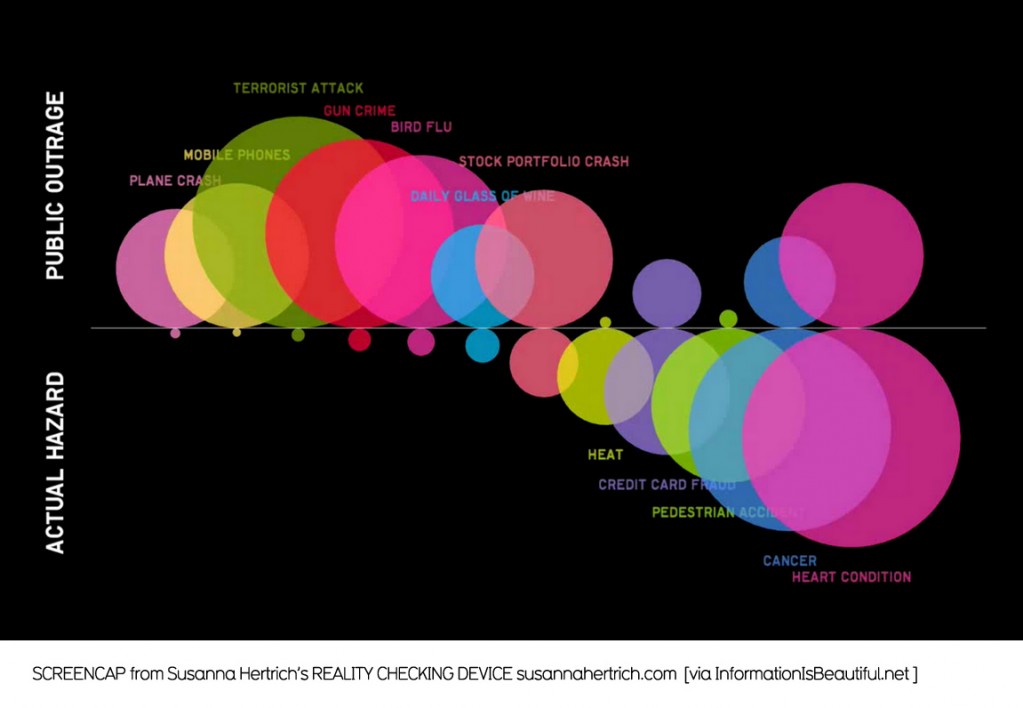
A graph regarding the the social construction of social problems, for example
 Many classical philosophers are even considered to be great sociologists (Nietzsche, Tocqueville, Marx, and even Machiavelli). Anything that can be studied regarding social life is sociology. We study what the world means, how it works, and why certain meanings exist in various contexts. And Yes, this means this is primarily an academic, research oriented field, meaning I study lots of ways to collect and analyze data (statistics, ethnographies, etc). In this sense, sociology is much, much farther from social work and a little farther from psychology than most people might think.

I love this quote by sociologist Armand L. Mauss, an LDS scholar, which I believe sums up the foundation of our discipline quite nicely for others to understand (and if you get a chance to read it, his story of how he got into academia and balances his academic and religious life is quite amazing as well).
A fundamental philosophical premise of sociology (and other social sciences) is that truth and knowledge are, by definition, socially constructed. That is, every society, community, and even every family constructs its own understanding of what is true and real through an ongoing process of negotiation across generations and between reference groups. As individuals, the only truth and reality we learn in growing up is what has been constructed in our families, communities, and nations before we were born. To a social scientist, this process of social construction is the only operative source of truth and knowledge available to us. There might be, in the mind of God, or in the ultimate design of the universe, a final, ontological, absolute reality, but such is not available to mere mortals, and thus much depends ultimately upon faith. The only reality we have by which to live our lives is socially constructed. During our lifetimes, it will be subject to change, so it is relative not only to culture but also to time and place.
I  hope I have been able to shed some light on the field of sociology here today, and if anyone has questions or comments, please do not hesitate to make them known.

Tuesday, February 22, 2011

The Road from Harahan

One of the best parts about traveling is getting to know the people and places like a local, and being accepted into a culture. When I started catching the bus around Los Angeles, I got to know the city pretty well, which is something most people can't say for themselves because of the circumlocutory nature of the freeway system and the sprawled character of the city itself; it prevents them from actually getting to know the streets and the people on them. There's something to be said about that feeling you get when you know where you are going and what you are doing in a place like LA. It's so exhilarating to be oriented in a place and even to be able to recognize parts of a city in TV shows and movies and know exactly where those shots were filmed. When you are able to recognize a city skyline and are able to get around on your own, it's like that city becomes a part of you, and more importantly, you feel like you have become a part of that city.

As I was thinking about my upcoming trip to Seattle, a new big city for me to visit, for the Pacific Sociological Association conference, I began reminiscing about my trip to New Orleans last April for the American Planning Association Conference. New Orleans, or N'orlans and NOLA as the locals seemed to refer to it, was an amazing, walkable city. I was able to see a lot of it in the 4 days I was there. I danced all night in the French Quarters with some fellow planning students in the grad program at The University of Arizona, I visited the National D-Day Museum near my hotel in the conference district of downtown, I walked along the Mississippi River and had Cafe Du Monde's famous beignets near the St. Louis Cathedral. What a great trip. Since I was able to walk everywhere I went, I felt like I was able to know it better than most can in just 4 days. It was such a great place to be! And attending the wonderful conference sessions by many locals, I feel like I got to know a lot about the other parts of the city which I was not as fortunate to attend. I even had the opportunity to attend a sort of field trip session to the Upper and Lower Ninth Wards to see how the disaster has damaged the communities in those locations. Even five years after Katrina, these communities were still in ruins, and yet they were the heart of NOLA.

I am so grateful that I had the opportunity to visit such a wonderful city. I remember catching a shuttle from the airport to my hotel at just after midnight. I didn't make it there until around 1am. The entire ride there, I couldn't help but to look out the window and see the Superdome under construction, boarded up shops and in some cases buildings, shady street corners and empty sidewalks in the dead of night. When I arrived, I was informed that the hotel had overbooked, and they would be sending me to Harahan, another town nearby, for the night, free of charge. The lady at the counter handed me some cash and called a taxi to take me there. I was terrified at the thought of riding a taxi by myself for the very first time in my life in the middle of a strange city at such a late hour when I had to be back by 7am. I was extremely stressed about the whole situation, especially regarding getting enough sleep and making it to all the sessions I wanted to attend on time, but looking back on it, I think the taxi rides there and back were the highlight of my trip.


On the way to Harahan, I made light conversation with the cab driver. What else was there to do? I discovered much about him and his family who were immigrants from Bangladesh and had moved to New Orleans not a year after Katrina in order to take advantage of the cheap costs of living and to establish a career in the taxi cab business. He didn't know much about the city before the hurricane had hit, but he knew it inside and out the way it was afterward. While it was interesting getting to know this man, I think the ride on the way back was the the most memorable taxi ride of my life. I was already running late on my way back to the conference center, and my taxi cab had not yet arrived 30 minutes after I had called for it. So I jumped in the back seat of the next taxi cab I saw to ask the driver if she knew anything about the situation. She didn't, but she was willing to take me there anyway. Since it was supposedly during morning traffic hours, she took the side streets to get to the conference center, taking 20 minutes longer than I had hoped it would. The whole time I was tense from the thought that I was so late, but the driver, a chubby middle aged caucasian woman who was born and raised in New Orleans, was pleasant to talk to. She told me the most fascinating stories of all the neighborhoods we passed through. She was still a taxi cab driver during the 2005 hurricane disaster, and she told me of how aside from police, taxi drivers were the only ones allowed to drive within the city during the recovery effort, and she was able to see the city at its worst. As we passed certain streets and neighborhoods, she would tell me things like, "Do you see that line along these warehouses here? That's how high the water was." I could not have paid for such a tour of the city. The local knowledge this lady held was astounding, and I was glad to have had her as my guide on the way back to the downtown area.

In the end, I had some wonderful experiences and forged great friendships at that conference, but I never thought much about that taxi ride until now. And yet, it has proved to be one of the most memorable parts of my trip that year. It's so interesting to think about which life experiences, intended or unintended, have the greatest impact on your life. When it comes to deciding what gives meaning to our lives, I do believe that often times reflection on past experiences is what actually creates meaning rather than the experiences themselves. How we react to those experiences once all is said and done is what gives them significance. While I definitely had more fun hanging out with other planning students in the city, I learned the most from this random cab driver I spent half an hour with one morning. She has contributed so much to my knowledge of NOLA, and that was the whole purpose of my trip: to truly understand and experience the city from the local perspective as much as possible.

Monday, February 14, 2011

Holiday

As I get older, it seems to me that holidays are increasingly commercialized ventures which exist for corporations and businesses to sell products to us which we think we need to buy in order to prove something on these "special" days of the year. Since Valentine's Day fell on a Monday this year, I found myself struggling to get the things I needed to do accomplished today. It was a pretty busy day without all the lovey dovey stuff I had to prepare, and I barely finished half of the things on my to do list. And on top of that I was late to dinner. Sometimes, holidays are just frustrating. If they don't live up to expectations, people can be very hurt and let down, which seems to happen more often than not. So why do we put ourselves through all this stress? Why do we spend so much time, effort, and money on these holidays? Is it worth it? Sometimes I think it is, other times I am not so sure.


I am a sentimental person. I am a hopeless romantic. So naturally, I do enjoy preparing valentine treats and gifts for the people that I care about. If I could afford it, I would spend money on all my friends any time I saw something that I knew they would like. Last week, my graduate school cohort decided that we wanted to exchange valentines like we used to in grade school, "the cheesier the better." I really took this to heart and ordered several personalized valentines day cards from walmart.com where I could insert my own photos into the cards. I also made little goody bags for everyone. It wasn't so bad as there are just 13 people in my cohort, myself included, however I ended up spending a bunch of money on this. While I enjoyed this little project and embraced it as a fun, creative way to procrastinate my homework and other projects, I found myself thinking more and more about the significance of it all. Really, valentines doesn't mean much more than flowers and chocolates these days. Not many people even know the story behind the holiday, which really is based upon the martyrs of several Christians called Valentine. No one knows for sure how the commemoration eventually came to be the holiday where we express romantic love in society, although several stories attempt to account for this. It could also be a mesh of commemorating the Christian saints and the "pagan" Roman Lupercalia festival, which focuses heavily on fertility. Either way, no one really focuses on the origins of the holiday or the true meaning behind it. The fact is we are socialized to expect romantic behavior from our loved ones on this particular day of the year because that is how things are. It's interesting because greeting cards, chocolates, and flowers has become such a major part of the holiday, and yet no one really knows why either (although I strongly suspect it is because women like receiving these things from their significant others).

Thinking of the story behind Valentine's Day reminds me of those holiday door decorating contests our classrooms used to enter in grade school. The class with the best door decorations won a pizza party or an ice cream party, depending on the holiday. When I was in 8th grade, my homeroom class was particularly good at these competitions, thanks to the competitive Mr. DeWolf who taught us that year. Our class had not planned on entering the contest, and the day before doors would be judged we brainstormed about what we might be able to come up with just for fun. I remember bringing up the most random ideas, you know, just in case they might work. And just days before, on February 1, 2003, the space shuttle Columbia had that terrible disaster in which it tore apart upon re-entry. I mentioned that event and everyone looked at me as if i was crazy. After all, it was such a somber event. But then a classmate and I turned the idea into a "Tribute to Columbia" and its astronauts. Some classmates met early before school the next day, Friday, February 7th, to put together the door decor and we ended up winning the contest over Miss Bissonett's class next door who chose to dedicate their decoration to the story of Saint Valentine.

For some reason, this experience makes me think of just how silly this holiday can be. What does it mean if we treat it as a day to give and/or receive candies and treats? Would any other day be just as special if we managed to put more time and effort into showing our loved ones how much we care? Just think of how much more special flowers would be on a random day, just because. I think the sweetest gift I had been given by someone was not flowers and chocolate on Valentines Day, but a simple post it not on my car saying, "I love you" out of the blue. While I do believe it is good for society to dedicate a day to love (or lack of it - Singles Awareness Day is also on February 14th :P) as many people don't think to make time for giving their loved ones flowers and chocolate on any other day, I also believe we should be treating the people we care about with the same respect, generosity, and kindness as we do on this, the 14th day of February, every other day of the year. So I challenge everyone to be more thoughtful and aware of giving and serving our loved ones today, tomorrow, and everyday.

Thursday, February 10, 2011

I Can Do Hard Things

I have always hated running. Don't get me wrong, I love sports and being active, but for some reason running is my weak spot. I can do most other physical activities pretty, well, but running has always just scared me. I was always a sprinter being good at running super fast for shorter periods of time. I remember in 8th grade we had to run a mile in PE class. We trained for it and it wasn't so bad. The girls and the boys ran at separate times which made it a little less intimidating for me. When the time came to finally run it all out, I led the girls for the first couple of laps. I was an extremely competitive person and I was feeling good about myself for the time being. But then I started to get tired. For some reason, I could never push through those moments. It was a struggle to keep myself going, although I did well and finished 4th out of all the girls in the end. Not too many people passed me, but still, I wonder what would happen if I tried harder? What would happen if I pushed myself a little more?

I went snowboarding about a week ago with some people from church and with the cheap lift tickets we got, I was content to practice switching to and from my toe edge on the bunny hill with all the other beginners who came to Brighton. And then I decided to try one of the bigger runs with a friend. I was so proud of myself that I was able to keep up all the way to the end on the first run. Working out at the gym regularly has been helping, I thought. Then during the second run, I found my thighs starting to burn and I couldn't push through it; I had to stop a couple times, and I even got stuck in some flatter areas once or twice. I decided to go on a third run and by that time, I found that I had to stop nearly every 200 to 300 feet or so to rest my muscles. Seriously, I wasn't sure if I was just so out of shape in those areas and simply could not handle the workout or if I just was too much if a chicken to just go with it.

My little sister and I snowboarding at Mountain High in Wrightwood, CA - Jan 2009

Thinking about these physical challenges I face, particularly in the area of running, got me thinking about Condoleezza Rice's forum at BYU last month again (see, I told you I'd revisit it!). There was one part of her address in which she talked about growing as a person through taking on our challenges and doing hard things. "If you love to write, take more math. If you love math, take more writing," she said. It is more fulfilling to master something that is hard for you than something easy. This is such an interesting approach to life. I feel like this is what is lacking in society today. So many people specialize in very narrow fields, and so many people simply like to do what they are good at. It makes sense! No one likes to do things they aren't the best at. Perhaps that is why I have always failed at running for longer than a half mile at a time. I know I am not good at running, therefore I avoid it like the plague. But how is this approach going to help me become a better person at all? I can't improve much if I don't address the things I think are most difficult for me to do in life. And running is one of these things.

It's so interesting to think about how much society has changed in the past  few hundred years or so. People used to do hard things regularly; it was a way of life. People did what they had to do to earn an income and make a living, and before that people did what they had to do because of the social class they were born into. If your parents were farmers, chances are you would have to learn how to farm no matter how difficult it was for you. If you parents were the King and Queen of England, you had to learn to be a politician despite any other desires you had in life. In a sense, we are lucky to live in a time when we get to choose what we will and will not do with our lives. We have countless opportunities to choose from in this regard. So why does it seem that so often we are choosing to do the easy things? Going back to Rice's talk, she recounted a time when she was helping a little girl with a math assignment, and when the girl got the answer wrong, she told Condi that "there is no such thing as a wrong answer." I think this example captures the essence of the lack of will and drive to do hard things; our society is increasingly becoming one of instant gratification more than ever before. People want the answers given to them for the difficult things in life. Again, I have to ask how does this make us grow? How does this make us better people? We need to push ourselves in order to accomplish more in life. Granted, we live in an age where people know a lot.We have access to more information than ever thanks to the internet, and we are able to learn and produce things of all sorts at an astounding rate. I know so many smart, talented people, and yet it feels like we are not living up to our full potential in society because it is so easy to stick with the things we know best. Imagine the things we could do if everyone was learning and performing to their utmost capacity. The possibilities for a better world would be endless! As much as I hate to admit it, I have contributed to this mentality of doing just what you are good at. I don't like to fail. No one does. So on an individual level, can I make any sort of difference? Would I be able to change other's lives by improving my own?

This semester I have decided to learn how to run. I have been running on the treadmill several times a week doing interval training since I don't think I can bear to run for long periods of time in the gym, and I hope to be able to improve my abilities in this area. Earlier today, I saw a banner somewhere along a road on the way to campus advertising the Provo Marathon and Half Marathon coming up in the beginning of May. It also advertised a  5K race and and Half Marathon Relay (2 person). Initially I thought it would be good to try the 5K to have something to work up to, but the more I think about it, the more I want to try the half marathon. I have enough time to practice for this, if I can make time for running. And I think if I start to run outdoors rather than on a treadmill, I will be able to acheive more. I guess I'll practice running for now, and we'll see where I am by the end of March. If I'm ready, I hope to register for the half maration. 13.1 miles isn't too bad, right? If not, I am determined to at least find a partner to try the relay with. 6-ish miles for each of us should be relatively easy. I'm excited to set this goal, but I hope I can keep up with the training it entails! After all, running is in my blood. My grandpa made headlines in Ohio running from Columbus to Cincinatti nonstop, and my dad was a track star growing up. Maybe if I try hard enough I can be a runner, too.

Thursday, February 3, 2011

Le Centre-Ville

There is something so intoxicating about being in a city. There are almost no words to describe the sense of awe and being you have when moving through a downtown area. In downtown, you simply feel like a part of everything. You become a small part of the city, and yet the city consumes you at that moment. There are so many elements of past, present, and future in downtowns such as Los Angeles that you simply cannot help but to ponder your place in the grand scheme and context of it all. This is one of the reasons why I love to travel and why I love history. Travel allows us to become a part of history, if only for a brief moment in time.


While often times I wonder if traveling is any different than looking at a picture or reading about a specific place, especially given the technologies we have which can capture so much, nothing can compare to being there. Standing in Times Square and strolling through Central Park at the turn of winter as it faded into spring was such a moving experience that I cannot begin to describe. One would have to be there to experience the eclectic ecology, the awesome mix of architecture, landscaping, and people moving in and through the city. No one can truly capture and recreate the aura and sense of a place completely. Even places like Disneyland and Las Vegas, in their attempt to recreate popular scenes and settings, have created something entirely shiny and new when compared to reality.

One of the worst things about Downtown Los Angeles is the traffic, and the I-110 that runs through the middle of town certainly does not help any problems the city faces. However, having had to drive on that freeway nearly every day for a few years, I have to say it is one of my absolute favorite things about living in LA, sans the traffic part. It's so tempting to look up and gaze at the skyscrapers when you are driving through. I never got over the fact that I was there, in Los Angeles, one of the biggest and most famous cities in the world. There's nothing like driving through downtown LA on the 110 on a sunny day - without traffic.


Being in Los Angeles, as well as in any other city I have been so fortunate to experience, gives me the itch, the need to create. The feeling I get when being in a city inspires me to express how I feel and make my personal mark on this world, no matter how big or small. I believe many other people feel the same way, which explains why so many artists, architects, businessmen, and creators of all sorts are drawn there, at least on one level.